For more information about Royal Holloway, please see this promotional video. To see a promotional video for the MA Consumption, Markets & Culture see here. To see a promotional video for the Royal Holloway School of Management, click here.

For more information about the Royal Holloway MA Marketing and MA Consumption, Culture & Marketing and the application process see here.

To get an understanding of the unique values that underly the MA Marketing and MA Consumption, Culture & Marketing programme please read these blog posts: Value of Scholarly Values, Importance of Reading and Morris Holbrook and Business Interest in Education.

Friday, 23 August 2013

Adults to Kidults- Alcohol Advertising for Infants


Older people like me remember a time when alcohol ads on the TV looked as if they were made for adults. They had actors who were clearly over 40 years of age, usually a lot over, and straplines aimed at that same wrinkly demographic. Today, we're used to alcohol ads that seem to be targeted at pre-teens. They're often colourful, surreal, ridiculous, and, above all, fun. What does this infantilisation of advertising mean? Was it a deliberate strategy to instil alcohol brands into the world-view of pre-schoolers? Or does it just reflect a change in mentality as people are getting younger, older?


I remember when it all began. The Hofmeister Bear was a character invented by an advertising man named John Webster. Webster worked for a London agency called BMP. He got the idea from an American TV show, and then he used a version of the character to sell Sugar Puffs, calling it the Honey Monster. Previously, he'd had success advertising Cadbury's instant mashed potato with characters called the Smash Martians, so Webster knew very well that a wise-cracking character that appealed to our inner-child engaged consumers with the brand (see some examples here ). No-one had done it before, though, with alcohol. At that time, in 1985, Britain was nation of bitter beer drinkers. The typical drinker's profile was male, 30-60, and a drinker of dark, bitter beer. Webster's brief was to make light, lager beer seem cool to young male drinkers. He made a series of TV ads (see some here ) featuring George, the pork-pie hatted, girl-chasing bear who was pictured on the label. Soon, Britain was changed utterly, and continental lager beer was the avant garde young man's tipple of choice.                  

Webster had sniffed out a major market opportunity with his actor-in-a-bear-suit shtick, and soon all sorts of brands were getting in on the kiddy appeal. Today, practically everything is marketed with characters once seen only in children's picture books, from insurance to loans, mortgages to car tyres. It is fair to say that this infantilisation is by no means confined to advertising. The same tendency toward child-oriented visual imagery, themes and story-telling techniques can be seen throughout popular media, in movies, the press, and broadcasting. As far as the marketers are concerned, we're all children now.

Critical theorist Theodore Adorno remarked that advertisers would like everyone to be ten years old. They made it happen by acting as if it were so, along with their colleagues in the other media industries. To be sure, marketing today is colourful and fun, and as an oldster I quite like not having to act my age in the way that my father did. It is entirely in keeping with the tone of postmodern marketing that the signs and symbols of childhood are mixed up with those of adulthood, rendering us all kidult consumers. But UK hospitals are reporting huge spikes in alcohol-related liver disease amongst people in their early thirties. This is the first generation who grew up enjoying TV ads featuring the Hofmeister Bear. Should we blame John Webster for the UK's alcohol culture? Well, no, not at all. But I think it's interesting to reflect on the way advertising has deployed childish imagery and themes during the past forty years. Today, it seems that the cultural distinction between child and adult seems quite confused.

I went through a few of these ideas when a TV researcher called me up who was working on a new TV show about the changes in advertising and British culture. I lent them some old VHS video reels I had of 1970s beer advertising. The show is hosted by a man called Ade Edmondson and is scheduled for 8PM on Tuesday September 3rd, ITV. Should be an interesting show for advertising and popular culture fans. I've put a few more examples of kiddy-oriented ads for adult products and services on the corresponding article on my own blog .

Update: I'm quoted on this topic in a feature on the decline of British pubs in Spiked magazine and I shall be discussing the same topic at the Barbican, London, on October 20th at the Battle of Ideas event.  


Wednesday, 7 August 2013

Learning to Play in the New Share Economy by Giana Eckhardt


I recently published an article in the Harvard Business Review (HBR), along with my colleagues Susan Fournier (Boston University) and Fleura Bardhi (City University of London), which explores how companies should approach and adapt to the share economy. The share economy refers to the explosion of organizations that have arisen recently that cater to consumers' desire to access goods and services rather than own them. This desire stems from space and time being at a premium in today's urbanized, digitally connected world, and some of companies that typify the share economy include Zipcar (car sharing) and AirBnB (house sharing), not to mention numerous organizations that facilitate bike and music sharing. But is access based consumption really as anti-consumerist, pro-environment and pro-community as the popular press portrays it to be? Or do consumers just want cost savings and convenience? We explore these issues in this HBR article by embedding them in a debate between managers at a fictional car sharing company trying to decide how to manage their brand. After you read the article, you can see expert commentaries from executives at AirBnB and RelayRides, and also leave your own comments. What has your experience been with accessing goods rather than buying them and how does your experience impact the debate?

You can access the article here

Giana Eckhardt
Professor of Marketing Royal Holloway


MA Marketing Video

Saturday, 27 July 2013

39th Annual Macromarketing Conference

39thAnnual Macromarketing Conference

July 2 – July 5, 2014

Doctoral Colloquium, July 1, 2014

School of Management, Royal Holloway, University of London


Macromarketing and the Crisis of the Social Imagination


Call for Papers

This age of crisis and austerity is not just an economic crisis, but also a crisis of the social imagination. During an era of neoliberalism that stands on the verge of engulfing universities and other walks of life, we are approaching a hegemony of thought in which the knowledge that counts is knowledge that serves capital, often to a brutal cost-benefit calculus. For macromarketers, the study of how markets and society intersect and produce one another forms the basis of the subject. In this conference we look at Macromarketing during crisis and wonder how the subject might engage with theoretical and practical insights that arise from such conceptual areas as neo-liberalism, globalization, financialization, precarity, semiocaptalism and beyond.


This is a conference that seeks to develop dialogue and rich exchange of knowledge and, in particular, seeks an analysis that connects us to the actions that we see on the ground, be they in in the austerity measures that cut through the world, revolts and giant-scale protestsat the time of writing in Brazil to Turkeyto consumer technology interfaces used for espionage purposes on an epic scale.

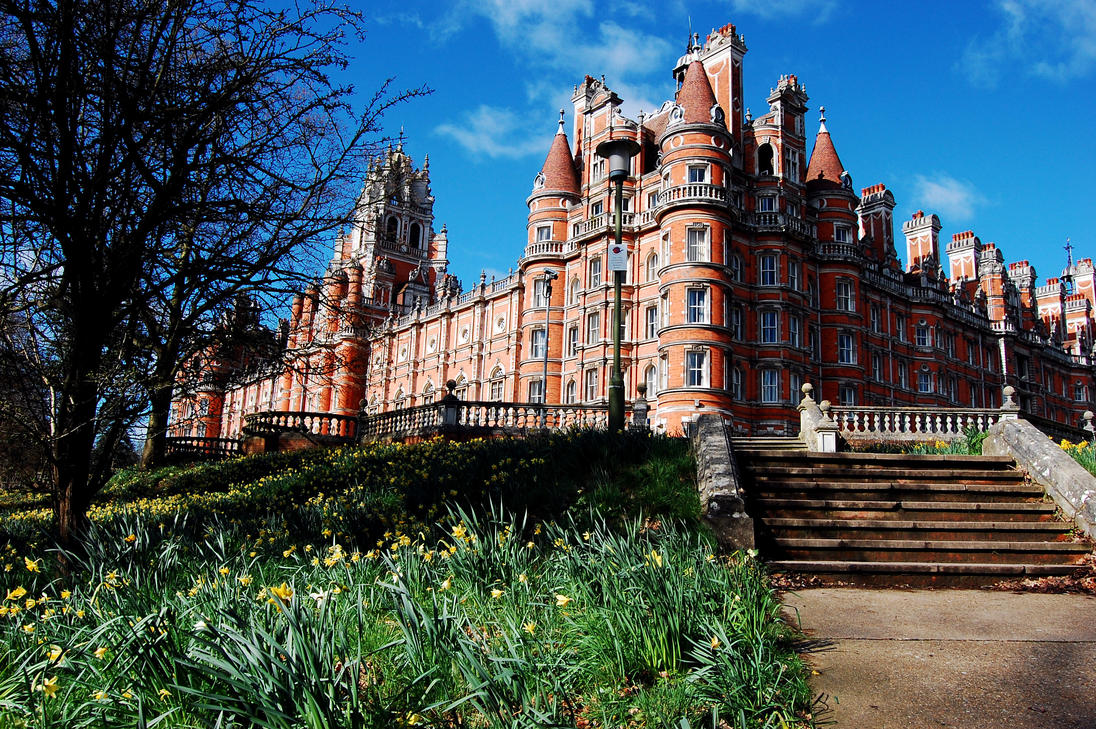
In 2014 we bring Macromarketing to Royal Holloway, a college of the University of London. The college itself is a beautiful 19th century Victorian building located in the outer reaches of the city, close to Heathrow Airport and the Great Park. The conference promises to offer a community-based intense setting for discussing issues of wider importance.


Please see the Macromarketing Society's website (http://www.macromarketing.org) for forthcoming updates on track chairs and registration details. Further information on the doctoral colloquium will also be posted.

Doctoral Colloquium (July 1, 2014)
On July 1, a one-day doctoral workshop will be conducted at the same site as the proposed conference. We hope that a significant number of participants in the doctoral workshop will also attend the conference (a special rate for doctoral students will be made available).

Conference chairs
For further information please contact conference chairs Alan Bradshaw (alan.bradshaw@rhul.ac.uk) and Alex Reppel (alexander.reppel@rhul.ac.uk).


Friday, 7 June 2013

Applicants Wanted for the New MA in Consumption, Culture & Marketing

Are you a perfect applicant for our Masters programmes? We are looking for students who have a 2.1 degree (or national equivalent) in a related subject area which might include business but could include such subject areas as history, philosophy, sociology, culture studies, classics, music, geography, English literature, etc. Most of all, we want students who are fascinated in the topic, who will accept the challenge of trying to engage with difficult-to-read texts, who are willing to stay up all night long with class mates discussing new ideas.

In addition, the following type of person is especially welcome:

"decayed roués with dubious means of subsistence and of dubious origin, alongside ruined and adventurous offshoots of the bourgeoisie: vagabonds, discharged soldiers, discharged jailbirds, escaped galley slaves, swindlers, mountebanks, lazzaroni, pickpockets, tricksters, gamblers, maquereaux, brothel keepers, porters, literati, organ grinders, ragpickers, knife grinders, tinkers, beggars — in short, the whole indefinite, disintegrated mass, thrown hither and thither, which the French call la bohème"


also "nihilists converted to Marxism and Marxists converted to shit, every kind of chip on the shoulder: sexual, political, economic, psychological, social, cultural, sporting and electronic; practising Zen Buddhists, Catholics, witches, voodoists, Islamists, santeria animists, a Mormon and two Jews, a pitcher from the Industriales team who pitches and bats with either hand; fans of Pablo Milanes and enemies of Silvio Rodriguez, expert oracles who know who will be the next Nobel Prize for Literature as well as Gorbachev's secret intentions, the last pretty boy adopted as nephew by the Famous Person in the Higher Echelons, or the price of a pound of coffee in Baracoa; seekers after temporary or permanent visas, dreamers, femmes and hommes, hyper-realists, abstract artists and socialist realists who'd reneged on their aesthetic past; a Latinist; the repatriated and the patriotic; people expelled from everywhere one can be expelled from; a blind man who saw, disillusioned and deceivers, opportunists and philosophers, feminists and optimists, followers of Lezama, disciples of Virilio, Carpentier, Marti and one adept of Anton Arrufat; Cubans and foreigners; singers of boleros; breeders of fighting dogs, alcoholics, rheumatics, dogmatists and head-cases; smokers and non-smokers; and one macho-Stalinst heterosexual"

also "Born Again Losers and the Lavender Boozers and some crack team from Washington Heights, the boys from Avenue B and the girls from Avenue D, a Tinkerbell in tights"

also "Postgraduates who never finished their studies, who broke themselves against the texts of Heidegger and Derrida and Delueze... Undergraduate geniuses, brighter than a thousand suns, who never received funding for postgraduate study... thinkers who were kept outside the university, obscure Judes who lived their entire lives in employment precarity; thinkers of unimaginable integrity, unimaginable will, reading Leibniz in their lunchbreaks, reading Canguilhem on the commuter train... thinkers too mad to think, institutionalised thinkers; alcoholic thinkers lying ruined on park benches, who were never given a chance."

and if at all possible "Thinkers who hate other thinkers. Thinkers who'd broken with old friends over intellectual matters. Over political matters. Thinkers at war, for whom philosophical enmity had become personal enmity, had become name-calling, and hair-pulling. Thinkers who'd shot away half their faces in despair, W. says. Thinkers with deep scars across their wrists. Thinkers who wept as they spoke. Thinkers whose pauses were longer than their talks. Thinkers in breakdown, their lives careening. Thinkers who spoke frankly about the misery of their existence.  Thinkers who told of why they couldn't think, why thought was impossible, why the end had come: their end and the end of the world. Wild thinkers. Drunk thinkers. High thinkers, nostrils flared, pupils tiny, staying up for whole weeks at a time. Thinkers with missing teeth. With missing eyes. Thinkers with missing fingers, and with great clumps of their hair torn out. Thinkers with terrible rashes around their mouths. Sick thinkers, walking with two sticks, W. says. Coughing thinkers, who could hardly get out a word. Thinkers who spoke too quietly to be heard. Thinkers who spoke too loudly, half-deafening the front row. Think-declaimers, thinker-prophets who might as well have set themselves on fire in the seminar room. Exiled thinkers, forced out of their home countries for crimes of thought. Lost thinkers, left over from vanished intellectual movements. Bereaved thinkers, in mourning for dead thinker-partners. Betrayed thinkers, who spoke of backstabbing and purgings, of auto-critiques and revolutionary punishment. Thinkers with neck-kerchiefs, W. says. Thinkers with cravats. Thinkers with Hawaiian shirts. Thinkers in plus-fours. Thin thinkers, in roll-neck sweaters, with sharp cheekbones and shaved heads. Tubby thinkers, epicureans full of joy, with great, jolly faces and think folds of fat at the back of their necks and spadelike hands, who'd laboured alongside others in the fields and the mines. Serene thinkers, half godly, looking into eternity with widely-spaced eyes. Laughing thinkers, who laughed because could think, because they were free to think. Thinkers who'd escaped from imprisonment and war. Saintly thinkers, of unimaginable integrity, of absolute purity. Nomadic thinkers, who, like swifts, never touched down, moving only from conference to conference as invited speakers. Traveller thinkers, who had forsaken the lecture circuit for private voyages through jungles and deserts. Ascetic thinkers, who spoke of great solitudes, great retreats. Thinkers who had seen things, lived things that were greater than they were. Thinkers who knew what it meant to live. Thinkers who served life. Thinkers who thought in order to live, to be alive. Thinkers who spoke of the ecstasy of thinking after their talks, in the student bar. Thinkers who spoke of the beatitude of thought, tears glittering in their eyes. Thinkers who said, the only thing that mattered was to think. Bearded thinkers, with great bushy beards like Marx's, or tidy, trim beards like Lenin's, or goatees like Trotsky's, or - very rare - neckbeards like William Empsom's. Nonagenarian thinkers. Centenarian thinkers! And thinker-youths, no more than 20 years old, mere pups, with minds like steep traps. Thinkers who'd been imprisoned for thinking, W. says. Thinkers who'd been half-crucified for blasphemies of thought. Thinkers whose tongues had been ripped from their throats. Mute thinkers, whose papers were read for them. Thinkers whose voices were hoarse from screaming. Thinkers who refused to think, out of shame, and refused to read their own paper, out of modesty. Humanist thinkers, dripping with pathos, W. says. Anti-humanist thinkers, siding with viruses, siding with plagues, waiting for the demise of 'man'. Thinker-fanatics, full of hatreds and ecstasies. 'Your kind', W. says."


(Above links bring you to the original sources from Marx, Sedgewick, Ginsberg, Kerouac, Padura, Reed, Iyer and Herzog)

Tuesday, 4 June 2013

Hello Kitty ! How to grow brands with human characteristics

Ever since my French exchange partner (Jean-Francois) managed to pull a garden rotivator up his leg on day two of my Easter ski trip I have been a bit of an Asterix fiend.  To this day I am pretty good at reading French, even if my accent is 'un petit peu franglais', because this accident meant I got to read three or four Asterix Bande Dessinee each day for the remainder of my stay.  BD, to those in the know, cartoon books if you were still wondering, are very popular even amongst adults in France, many homes will have a collection of these. Oddly, Tin Tin (who is Belgium and a good answer to the 'name three famous Belgians' question) never quite did it for me.  I have collected Asterix stuff over the years, and even visited Parc Asterix, near Paris, as a grown up to taste the theme park branded experience.

The Japanese Manga craze came to late for me, even though my boys are Pokemon mad. I was therefore intrigued when my marketing colleague Sameer mentioned he had just been published a peer reviewed journal paper about Hello Kitty, the cat like character that is a global marketing phenomenon.  A cooler, younger, Asian cartoon character that, without much of a back story seems to have grown to become a global player.  Extremely feminine, cutesy, pink, fluffy and kitch, my oldest son begged me not to buy Hello Kitty branded (and scent impregnated) tissues.  I care not what I wipe my nose with and given that both my sons were encouraged to hang out with girls at dance classes in their early years, I really didn't see pink tissues as an issue.  Joel, however, was insistent.  "They are for girls ! If you get those I won't use them."  They were £1/box on special offer, cheaper than the alternatives.  Decision made.

Must buy Hello Kitty Pomegranate Branded Iced Tea

Hosany et al, (2013) in the Journal of Marketing looked at the theory and strategies of anthropomorphic brand characters from Peter Rabbit, Mickey Mouse, and Ronald McDonald, to Hello Kitty, a topic the marketing literature has not yet considered much.  It draws on Aaker theory, that is close to my heart, on brand extensions and line extensions and seeks to explain how Hello Kitty has achieved the venerable status of being the third most counterfeited global brand.  It considers the use of nostalgia and contemporary resonance to ensure that Kitty fans continue to find the brand proposition relevant even in adulthood.  A good thing ?   With its diamante sparkle and fluffiness I am surprised the anti-everything gang hasn't dubbed the brand "Hello Kitchy". 

VW lashes:  Are you making eyes at me ?
Not everyone is into the cutsie humanisation concept, of course.  VW camper van and Beetle owners are renowned for naming their vehicles and treating them as though they were part of the family.  One of my metrosexual dad chums refused to put eye lashes made from windscreen wiper rubber on his middle aged crisis sports car.  Not even for a day !  I taunted him over email with this picture (left).  He stood firm.

I know it might not be perceived as cool by others, (I transcend notions of coolness) but take this recent example of personalisation that I captured on the side of what otherwise would be seen as yet another dull, functional, delivery vehicle.  White van man was a bit of a negative cultural stereotype in the UK for a while, synonymous for a type of bad mannered driver who lacked common courtesy, but didnt' care. 

Surf chic on this White VW van ?
I love the sense of fun, the celebration of an iconic brand in a spray of blue hibiscus flowers.  The owners sense of fun, pride in his alloy wheeled van, that includes the tropical flower silhouette, so evocative of the beach surf scene.

It's almost as though you would expect to see a couple of surf boards nestling in the back of the van with a sand encrusted wet suit.

I haven't tried this before, but why not share below your own stories for cartoon characters ? What name would you give this white van ?

Thursday, 30 May 2013

Special Issue of Ephemera: Politics of Consumption


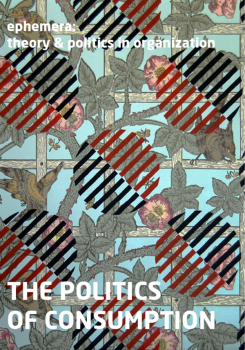
I am proud to announce that a special issue of Ephemera: Theory & Politics in Organization, that I guest edited along with Stephen Dunne and Norah Campbell, is published. As always, Ephemera is open access publishing so you can freely access content here.

The special issue follows from a conference that we organised last year in Dublin addressing the theme of the Politics of Consumption. We had an excellent conference with keynote addresses provided by Ben Fine and Kate Soper, we had an excellent panel discussion about the consumption of law by Gerry Hanlon and Stefano Harney and a panel discussion reflecting on how to think of the relationship of consumption with austerity Ireland that included the Marxist sociologist Kieran Allen. In addition, we had many excellent papers all presented in the Irish Royal Antiquarian Society in the heart of Georgian Dublin.

The special issue includes several of those papers and also a set of commentaries prompted by Stevphen Shukaitis concerning whether objects and commodities can be comrades. In this section you will find some very interesting and often counter-intuitive pieces about fascist rice, the re-radicalisation of the image of Che Guevara, the artist David Mabb discusses his radical encounters of the artwork of Popova with Morris and Olga Kravets gives an outstanding overview of how objects were consumed during the Soviet era. There is much more inside the issue as well - not least an article by leading brand theorist Adam Arvidsson and a consequent exchange between he and Detlev Zwick.

At a time when academics increasingly wonder why our labour becomes privatised by commercial publishers, Ephemera remains open-access. Please click through the links and enjoy!