For more information about Royal Holloway, please see this promotional video. To see a promotional video for the MA Consumption, Markets & Culture see here. To see a promotional video for the Royal Holloway School of Management, click here.

For more information about the Royal Holloway MA Marketing and MA Consumption, Culture & Marketing and the application process see here.

To get an understanding of the unique values that underly the MA Marketing and MA Consumption, Culture & Marketing programme please read these blog posts: Value of Scholarly Values, Importance of Reading and Morris Holbrook and Business Interest in Education.

Friday, 23 September 2011

Try Brazil, Try! by Rodrigo Ferreira

A piece by MA Marketing student, Rodrigo Ferreira, to mark the Rugby World Cup. 
Brazil is the real football nation. Ok, football was invented in England, but no other country has developed it into a so high level of results and entertainment. Five World Cup titles represent exactly the love Brazilians have for the game. As an evolving society, the attention given to football suppresses all other sport investments. All Brazil's top athletes have to count on their own talent and money to progress and make history, like Ayrton Senna on F1, Gustavo Kuerten on Tennis, Diego Hypóilito on Gymnastics and also the world swimming record holder César Cielo.  
Now, with Brazil on the sports spotlight having received the Olympic Games and the Football World Cup in 5 years from now, things are about to change. Some brands are facing the opportunity of becoming part of potential markets, expecting growth to bring a huge new wave of passionate fans. One of the leading sports on this race to growth is football's brother: rugby, a sport with massive support in almost all traditional football countries. Topper, a Brazilian sportswear and sports material brand, is now the official sponsor of the Brazilian Rugby Confederation, and as a campaign concept they decided to use exactly this evolution theme, but in a very ironic, funny and alternative way to attract an audience and make them friendly to this “new” sport. Check it out: 
Argentina Facts
- Nothing can stop our Rugby. In 2003, we were in the 5th place on the Southamerican Championshipe. While Argentina was the first.
- This year, we were 4th. And Argentina? First.
- This shows the spetacular progress of brazilian rugby. While Argentina remains … stuck.
- Do you want more? The sign of zodiac of the Brazilian left winger is the same of the best Irish player. Coincidence? Hmmm. No.
“Rugby. One day this will be great in Brazil”
“Topper. Official sponsor of Brazilian Rugby”
 Chile Facts

- Brazil walks firmly to the elite of world rugby. Compare the last two Southamerican championships. In 2009, we lost against Chile by 79-3. In 2010, we lost by 31-8.
- That’s it. Brazil has humbled Chile with a performance 70% better.
- Furthermore? Brazil has never lost against France or New Zealand. In a Southamerican Championship.
“Rugby. One day this will be great in Brazil”
“Topper. Official sponsor of Brazilian Rugby”
 Uruguay Facts

- Brazilian Rugby haunts the world. On 2009 Southamerican Championship, Brazil lost against Uruguay, 3-71. On the same Championship in 2010, Brazil 10, Uruguay only 26.
- If the result trends remains the same, in 2011 the score will show: Brazil 17, Uruguay -19.
- And more, guess where the best rugby player in the world was born… Hmm It doesn’t matter.
“Rugby. One day this will be great in Brazil”
“Topper. Official sponsor of Brazilian Rugby”
 Press

- Let’s begin the press conference. First question, please.
- I would like to know. Now, once your team has qualified to the next step of Brazilian Rugby Championship, will you change anything?
- No. The team players who quallified are the same until the end of the championship.
- Next Question….. You, please.
“Rugby. One day this will be great in Brazil”
“Topper. Official sponsor of Brazilian Rugby”
 Autograph

- Sir. Aren’t you that famous brazilian rugby player?
- Yes, that’s me.
- Oh, God. Can you give me your autograph?
- For sure.
- Thank you.
- You’re welcome.
- - -
- Thank you, love.
“Rugby. One day this will be great in Brazil”
“Topper. Official sponsor of Brazilian Rugby”

Thursday, 22 September 2011

Postmodernism Style & Subversion 1970-1990

This is the title of a new exhibition opening on 24th September at the V&A (see details here) which sounds exciting and very relevant for your Contemporary Issues module. I'm really looking forward to seeing it and hope some of you will go along too!


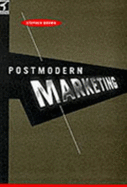
The idea of Postmodern Marketing (read Stephen Brown's seminal book on the topic!) permeates all the topic areas on this module so its important for you to understand. The postmodern era signalled a major change in Western thinking and philosophising and has influenced all disciplines but particularly the humanities and social sciences. As a cultural movement it overturns many of the key assumptions that have underpinned traditional thinking for several centuries. So postmodern marketing challenges many of our ideas about traditional marketing. However, there are now big debates as to whether postmodernism is dead (the exhibition seems to signal this!) - if so, what is replacing it and what does this mean for marketing? For more on these debates read this article.

Stephen Brown's seminal book Postmodern Marketing

The nature of this exhibition emphasises how cultural perspectives are relevant, not only for your Contemporary Issues module but also for the MA Marketing more generally. Remember too that philosophy is like plumbing (according to Mary Midgely, a famous English moral philosopher): it underpins the way we think and act in our daily lives but largely goes unnoticed!

Tuesday, 20 September 2011

Welcome to New MA Marketing Students


Welcome to all of the new MA Marketing students. For the benefit of those who missed yesterday's induction speech, I made three challenges for students.

First, be active students not passive consumers - despite the popular discourse, we reject the idea of students as consumers and prefer students as students. A consumer consumes the commodity of their choosing. However we do not want you to consume knowledge but rather to be part of our academy for a year and produce your learning outcomes. We do not wish to engage in the commodification of knowledge and reduce it to a series of easy-to-understand, easily digestible little sweet cakes for you to take home and enjoy later; we want you to get your hands dirty in the messy and difficult world of raw knowledge. Your learning outcomes will not be something that we give, but rather something that you must generate over the course of the programme. Being active entails reading constantly, participating and leading class discussion, taking extensive notes during lectures and working voluntarily with your comrades.

Two, do not think like a business leader, think like a philosopher - business thinking has a bottom-line focus on profitability however knowledge, in its broader sense, has a much wider remit and must also consider aspects relating to justice, freedom and beyond. We must never simplify knowledge in order to satisfy a short-term problem solving need, but rather constantly consider complex implications and broader consequences across political, ethical, economic, social, historical, cultural, technological domains. Therefore we want you to temporarily bracket the knowledge demands for your career aspirations and instead spend this year thinking about marketing philosophically. This entails not wanting to know how to do marketing, but rather seeking to understand life in the context of marketing. We are confident that your career aspirations will not be damaged but rather will be enhanced and that you will graduate as a more intellectually rounded person.

Three, be inspired - the best performing students are not those who are naturally the most intelligent but rather are those who are the most curious about the topic. We have a library full of books, a city full of culture - we want you to explore and identify an intellectual point of interest that you will carry through the year and will keep you motivated and fascinated. We want you to find something marketing theory related and use it to drive you along throughout the programme. This means that you need to be engaged in self-directed reading  and constantly be looking to identify points of intersection and relevancy between your area of interest and modular content. This area of interest can later form the basis of your dissertation.


Click here to see Cornel West talking about why reading and thinking
 philosophically is courageous, inspirational and electrifying.

Finally some practical suggestions:

  • If you do not speak English as a first language then embed yourself in English. You must be spending the majority of your day living and learning through English in order to keep up. 
  • Bracket several hours a day, and at least one day a week, for the purpose of reading. Read physical books - do not scan material on computers screens - and go to beautiful libraries to read (such as Senate House Library, the British Library or the Founders Building Library). Do not take a laptop or phone but instead focus on your book and read it cover to cover. If you find the text difficult to understand do not give up. Remember the more you read the more familiar the ideas become and the easier reading becomes. Also remember, it is not supposed to be easy. 
  • Form reading groups with colleagues. Divide books into several chapters and every meeting a different person leads the discussion. This is a good way of meeting friends and also generating positive and productive peer pressure that will keep you focused. The more social you make your reading activities, the more likely you will both enjoy and sustain the task.
It is very easy to fall into a trap of feeling lonely, becoming stressed by the programme demands and frustrated with programme content. These challenges and pieces of advice are designed to help you enjoy the programme and perform well in your studies. We want you to enjoy your studies. Remember we are not here to serve you, but we are here to support you as you take leadership over your own learning outcomes.  

Sunday, 18 September 2011

JG Ballard's Consumer Culture


Six miles from Royal Holloway amongst London’s many suburban satellites lies Shepperton, where JG Ballard allowed his imagination to run wild. In his 1979 novel, The Unlimited Dream Company, the suburb undergoes messianic transformation as its residents learn to fly and transcend the limits of their humanity. Just a few short miles away in Heathrow Airport, Ballard imagined a gang of symphorophiliiasts -or car-crash sexual fetishists - wrecking havoc on the motorways whilst the nearby Kingston Shopping Centre inspired Ballard to imagine the mall dominating local live and organising a fascistic and violent consumer society. Across his scores of novels and short stories, JG Ballard created a psycho-geography of Royal Holloway’s vicinity and provides a unique critique of consumer culture.


JG Ballard who died in 2009 is best remembered for his novel Crash (adapted for cinema by David Kronenberg) and Empire of the Sun which became a Steven Spielberg epic movie and introduced Ballard to a mainstream international audience. Empire of the Sun was inspired by Ballard’s own childhood in a complacently opulent ex-pat community in China that was suddenly thrown into upheaval by the outbreak of the Second World War and resulting in his internment at a war camp in Lunghua, outside Shanghai. Ballard’s was a childhood transformed from a privileged upbringing surrounded by the poverty of Shanghai into a total breakdown of adult authority, a severe scarcity of food and a precarious world in which beatings regularly took place and a man was strangled to death before his very eyes. The insight – deeply woven into his psyche – that order and civilisation can suffer sudden severe ruptures and collapse into dystopia at any time fuelled his imagination and formed the basis of much of his literary output. Working close to the genre of science fiction, Ballard came to imagine a civilisation ravaged by dessert like conditions brought about by severe global warming (Hello America),a tropical world devastated by global flooding (Drowned World) and jungles that suddenly begin to crystalise (The Crystal World). Throughout Ballard remained fascinated by new forms of psychopathologies generated by modernity as the car crash became a site for sexual arousal (Atrocity Exhibition, Crash), claustrophobic conditions of urban living takes it mental toll (High Rise) whilst the total conditions of technologically equipped modern parenting causes children to murder their parents (Running Wild). In Millenium People, the squeezed middle classes of Chelsea Marina become so fed up of their living conditions that they seek revolution against themselves whilst in Supercannes high executive business leaders turn to episodic psychopathic beatings of immigrants in order to maintain their work focus and productivity.


Consumer culture held a particular fascination for Ballard, as his biographer, Baxter, recounted he had “the voice of a born advertiser, paradoxically preaching a jihad against commerce: the contradiction at the heart of Jim’s life”. Indeed Ballard remained amazed at how marketing sought to constantly juvenalise consumers and was fascinated with the consequent psychoses. Kingdom Come remains Ballard’s most explicit exploration of a psycho-politics of consumer culture and advertising mediated living yet the concern forms a thread that runs all the way through his oeuvre. For me, Ballard’s work forms a counter-part to critical theory – in contrast to despairing laments for a world of lost rationality, revolutionary call-for-arms and eschatological accounts of excessive accumulation, environmental destruction and marketing overload, Ballard also provides a nihilistic anticipation for disruptions to come. Speaking in the South Bank Show he imagined himself  standing on the side of the Motorway with a sign that says “danger ahead, slow down. But other times I see myself warning “danger ahead, speed up”.


For incoming students to Royal Holloway, Ballard’s novels provide a fascinating psycho-geography of the locale, accounts of the consumer society that range from the nihilistic to the critical and a sphere of imagination that brings much course content to all-too-terrifying life.

Thursday, 15 September 2011

Towards a More Inter-Disciplinary Understanding of Consumption, Ethics and Politics

Yesterday my colleagues Andreas Chatzidakis, Pauline Maclaran and Laura Spence organised an excellent workshop on Inter-disciplinary Perspectives on Consumption, Ethics & Sustainability as part of Royal Holloway’s Centre for Research in Sustainability. I participated in a panel roundtable discussion on the topic "Towards a More Inter-Disciplinary Understanding of Consumption, Ethics and Politics" chaired by Robert Caruana from University of Nottingham and including Rob Harrison from Ethical Consumer Magazine. I here post my comments.

I sought to make four observations about the nature of business scholarly interest on the subject of sustainability borne from interdisciplinary perspectives. This is not to say that the insights are absent from sustainable business discourse (though very often they are), but rather to re-emphasise what I think are four important points.
Firstly, I believe it is important not to bracket capital from discussions. Drawing on David Harvey’s recent book Crises of Capital, it is useful to think of capital as an active and objective agent that is extraordinarily determinate and principally concerned with multiplying itself. As Harvey states, the history of capitalism post-Industrial Revolution demonstrates an almost consistent compound growth rate of 3%. Should this continue, as it almost certainly will, we will have a doubling of global capital within twenty years – meaning that there may well be twice as much consumption and production. There is absolutely nothing sustainable about this and whilst sustainable practices may emerge, the growth and trajectory of capital and its ecological impact is fundamentally non-sustainable.
Second, I detect over-emphasis on nexuses of production and consumption as analysis very often follows process links between consumers and producers that feedback on itself and are often (or at least have the potential to be) mediated by ecological concerns and ethics. However such a focus is to miss what the political economists are telling us: that we live in the age of financialisation which has alternative focal agents. The vast majority of consumer expenditure does not take place in the ordinary realm of exchange which consumer behaviourists observe, but rather on servicing finance – for example rent, mortgages, interest rates, insurance and so on. Typically consumers have almost zero agency and limited awareness over these financial transactions that define the vast majority of our expenditure and the scope for mediating financialisation by ethical or ecological concerns is far less than in production-consumption nexuses. The danger is that financialisation is not submitted to the lens of sustainable business practice and the subject does not engage with the focal point of capital accumulation.
Third, in as much as capital functions hegemonically, it appropriates critical discourse and re-packages and re-directs it according to its own logic and needs (the classic example is the Che Guevara t-shirt widely sold by the Gap and through this mass commodification, the image loses its revolutionary political signification). Business schools are particularly vulnerable to this ideological appropriation. Where and how do we conceptually and strategically draw the line between analysis that is progressive and that which reproduces this ideological trick? How do we apply a reflexivity, critically engage with sustainable scholarship and maintain a necessary distinction between a good and bad politics? Is there a risk that in seeking to expand the subject area, that an anything goes spirit prevails that provides fertile ground for ideological appropriation?

Fourth, to what extent do we suffer from temporal delusion? The prevailing liberal logic maintains that markets, left to their own devices, will eventually act rationally with reference to global warming and that a series of innovations must be experimented before the solution is achieved. However with global warming it is important to note that we do not get this second chance and, as Zizek insists with his penchant for using extreme statements to shock people into realising what is at stake, the logic that would rescue us is not liberal patience but rather authoritarian terror. Alternatively, as Zizek argues in his most recent book Living in the End Of Times, we have already crossed the precipice: the destruction of our ecology is irreversible and we are now in the end game. Assuming eschatological times, Zizek suggests that a lot of the discourse contains disavowed knowledge, erasure and is typically defined by denial and bargaining rather than acceptance of our reality and a belief in the possibility, let alone inevitability, of catastrophe. Leonard Cohen, as per usual, puts it best: "I don't consider myself a pessimist. I think of a pessimist as someone who is waiting for it to rain. And I feel soaked to the skin".

Wednesday, 14 September 2011

UNICEF Criticises Advertising to Children

A recent study by children's charity UNICEF has suggested that British children are less happy than those of other European countries. They have said that a ban on advertising to children might help to reduce their materialistic outlook, and that it also might encourage British families to spend more time with each other. The study claims that British parents sometimes buy their children too much stuff, to compensate for not spending time with them. UNICEF point out that in some countries there are restrictions on advertising to children, and in Sweden it is banned on TV. The BBC report can be seen on http://www.bbc.co.uk/news/uk-14908194

I have recently visited some East Asian countries, and it strikes me that Asian students on the MA Marketing might find such a view pretty strange. Materialism is alive and well among the aspiring classes in many Asian countries, yet to me it often seems to exist alongside strong values of family and education. Indeed, it reinforces them, in the sense that giving gifts or shopping together is strengthens relationship bonds. What is more, UNICEF claim that the British culture of long working hours and a long school day means that parents don't spend enough leisure time with their kids, yet many Asian parents and kids would work far longer hours.

Are UNICEF mis-reading the data on children in the UK, and is advertising just an easy target for criticism?

Tuesday, 13 September 2011

Milena Citton - A Student Describes Her Dissertation


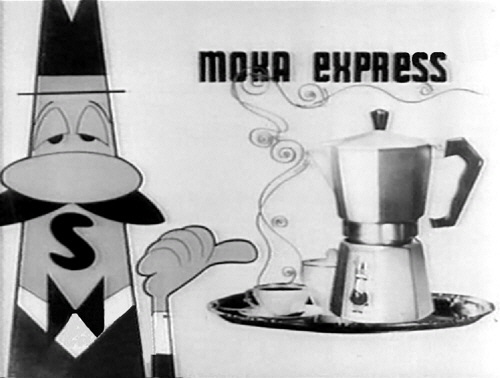
As a topic for my Master’s dissertation, I decided to investigate the realm of iconic brands with regards to a specific brand, Bialetti, a world-famous moka pot which I believe is a cultural icon for Italians. I tackled the research question using an integrated approach, which merged Holt’s Cultural Branding Model, Stern’s Deconstructive Strategy and Miller’s Materiality. As the CBM is concerned mainly with the analysis of advertising by examining how advertisements engage with consumers, I used it to determine how Bialetti addressed Italy’s postwar feelings and desires with their commercials from 1958 through 1968. Bialetti’s postwar commercials were structured in such a way as to help men and women live in a world of modernity, which was new to them after twenty years under Mussolini’s dictatorship, and each episode featured the main character, the Omino con i baffi (“Mustachioed Little Man”), teaching the audience how to perform everyday tasks such as DIY plumbing or cooking.

Bialetti set its image in the breadwinner identity myth, using the omino as the symbol for modern men, who wanted to achieve a higher status and were more keen on succeeding in their career than they were on parenting; in this sense the omino is portrayed as a white-collar middle-aged man who is not capable of basic DIY tasks (suggesting he is more intellectual than handy) and is never associated with fatherhood.


Holt’s CBM was integrated with Stern’s Deconstructive Strategy which examines binaries in the advertising messages and argues that they are levers that enhance the persuasiveness of commercials. In Bialetti’s case, I have argued that the funny and cartoon-like voice of the omino is put in opposition with the voice of a woman speaking at the end of the commercial because this juxtaposition enhances the utopian world of Bialetti. This utopian world is the world designed for modern men whose desire was to live a carefree life after almost fifty years of warfare. Furthermore, there exists a Human/Object opposition is Bialetti’s commercials, because the omino is depicted halfway between a moka pot and a man. Leaving his figure undefined enhances the impact of the advertising message on the audience. Finally, I have identified a Male/Female juxtaposition due to the presence of the omino and a look-a-like female counterpart, Aunt Betty. This, I have speculated, is a device that highlights the masculinity of the male character because his female version is portrayed as being more idiotic than him. My integrated approach also included the analysis of Bialetti from a material standpoint, following Miller’s assumptions on materiality. Using Miller’s studies allowed me to see Bialetti as a member of the family, rather than mere object. Thanks to an ethnographic research I conducted amongst Italian families, I have realized that many people share a number of habits. For instance, many informants do not wash their moka pot and many of them place it close to the hob ready for the next brew rather than putting it in the cupboard as they do with other items. Thanks to these shared rules I have witnessed a phenomenon Miller terms humility of things; the ability of possessions to shape and influence us when they are so embedded in our life that we cannot see them anymore. Furthermore, I have argued that a Bialetti moka pot can be considered an objectified companion, an object imbued with person-like qualities. As a matter of fact, it has come to represent a member of the family for the people who use it, keeping it by our side at times of distress, when studying hard for exams and even refer to it using feminine pronouns.

Taking the results of the application of the integrated approach into consideration, I have argued that objects can be analyzed using a triangular model that explains how possessions are imbued with social meaning. I have speculated that objects have an external appearance (shape, color, etc.) and a function and these two elements work in tandem to create the third angle of the triangle, meaning the immaterial condition, because no meaning would exist without a shape or a usage. I have argued that the social meaning of possessions is dynamic and static at the same time. It is static because (in my case) Bialetti will always be associated with iconicity, modernity and good coffee but the brand’s personality evolves and changes, making it dynamic.

This thesis has allowed me to conclude that Bialetti is, indeed, an iconic brand for Italians and it is an indelible part of this nation’s culture. The application of the framework I have employed can be useful for future analysis of iconic brand as well as for structuring an advertising campaign. The integrated approach makes it possible to build the brand image addressing a country’s feelings and anxieties, it makes it possible to understand the levers to use to enhance the effect of commercials and it allows marketers to see how the product becomes part of a family’s life.