This blog supports Royal Holloway, University of London's MA Marketing and MA Consumption, Culture & Marketing. The blog publishes news of new research, events related to the MA as well as any updates that our staff and students wish to circulate.
For more information about Royal Holloway, please see this promotional video. To see a promotional video for the MA Consumption, Markets & Culture see here. To see a promotional video for the Royal Holloway School of Management, click here.
For more information about the Royal Holloway MA Marketing and MA Consumption, Culture & Marketing and the application process see here.
In Charlie and the Chocolate Factory, Willy Wonka, marketing maestro, quotes O'Shaugnessy and reminds us that the ultimate dream-makers of today are the marketers who inhabit our lives with rich and hedonistic spectacles of make-believe and fantasy. Advertising typically depicts fantastical situations of adventure and conquest and encourages consumers to use these fantasies to develop their own identities. As Colin Campbell wrote in his seminal Romanticism and the Spirit of Consumerism, consumption is often a world of day-dreaming and yearning and we need to get closer to the world of Walter Mitty - that fictitious day-dreamer- to engage more directly with the spirit of consumption.
Fantasy, of course, is a complicated phenomenon and has received much attention from psychologists The world of the phantasmagorical is of particular importance for psychoanalytic understandings of our mental architecture as it blends together unconscious desires and fears with the conscious experience of the everyday. As Sigmund Freud argued at the close of the 19th century, it is through the interpretation of dreams that we can best encounter the underlying forces that structure our lives and experiences. More recently, Jacques Lacan emphasises the realm of the imaginative as structuring our sense of reality alongside the symbolic and the real. Therefore in this instance we see a convergence of interest between marketers and psychologists into the imaginative realm.
Advertisers frequently rely on fantasy to sell products.
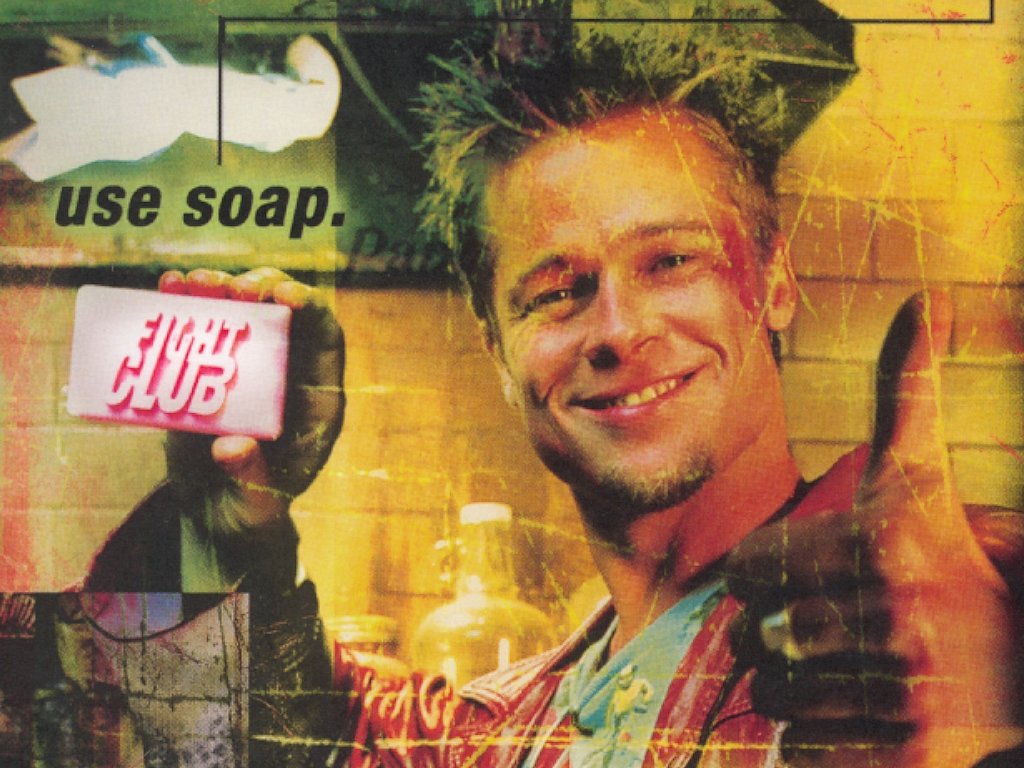
Of course if the world of imagination partly structures the everyday and if marketing throws its industrial might towards expanding our imaginative capacity, how real is the rest of our lives? As depicted in hit movies like Fight Club and the Matrix, disentangling the real from the imaginative from the symbolic and indeed the simulacra becomes an increasingly difficult conundrum that, in turn, gives rise to its own secondary level of fantasy.
On December 6 at Royal Holloway at 7:00 in MX001, we gather to consider this issue. We are very pleased to present two prestigious keynote speakers, Dominique Bouchet from University of Southern Denmark and John Desmond from St. Andrews University to consider the topic. Their presentations shall be followed by a panel discussion which will feature James Fitchett from the University of Leicester as well as the philosopher, Kate Soper. A wine reception shall follow. This promises to be a fascinating evening of discussion. All welcome.
(This post is reproduced from theconversation.edu.au and was written by Robin Canniford of the University of Melbourne and follows from this article)
Bodily waste can be an embarrassing subject, but one that most of us can avoid thanks to efficient toilets and sewers. Nevertheless, this embarrassment may be holding back improvements in sanitation where they’re needed most.
Over the course of your life you might spend three years in the bathroom and a considerable proportion of that time on the toilet. Yet, here is an activity widely regarded as so distasteful that, unless you’re a parent of a potty-training child or involved in a caring profession, your conversations on the subject are likely to be short and rare.
When we in “developed” nations do talk about bodily functions, we often do so through euphemism and metaphor. Consider the commercials in which a canine protagonist is draped in lengths of toilet tissue to illustrate the twin pillars of softness and strength.
Perhaps this is only natural. After all, a more literal representation of toilet paper in use would be less appealing than the symbolic alternative offered by an ever-young Labrador.
There’s nothing exactly natural about our aversion to talking about bodily waste however. Indeed, the historical sociologist Norbert Elias found that our relationship with bodily functions has become increasingly layered with distaste since the late Middle Ages.
Robin Canniford, University of Melbourne
Elias also noted that the shame around bodily functions, and the subsequent desire for privacy in the toilet, predated the emergence of scientific and political concerns over hygiene.
I don’t deny that the discoveries of bacteriologists and the rise of hygiene as a social ideal boosted the case to construct sewers and toilets. Nonetheless, sanitary concerns of waste removal don’t explain why we design buildings and rooms to separate toilets from all other architectural purposes; draping a veil of secrecy over our bodily functions.
Neither do concerns over personal cleanliness explain our anxiety when privacy in the toilet is disrupted. Consider what makes you nervous or embarrassed in these contexts: Is the presence of someone in the next cubicle distracting? Have you ever put down a layer of toilet paper to silence things just a little?
If the answer is no, then good for you: you’re free from centuries of emotional conditioning. Make no mistake though; the phenomenon is of enough concern that products exist to cover up our, erm, noisy movements.
Toilets and the treatment of bodily waste are important psychological and cultural concerns. Slavoj Žižek goes so far as to clarify the different features displayed in German, French and Anglo-American toilet conduct before illustrating how these compare with national character and philosophy.
In line with the anthropologist Mary Douglas – who argued that excreta can symbolically defile cultural space – serviceable cubicles, toilets, drains and sewers all uphold personal experiences of social and spiritual order. They are widely considered to be markers of civilised society.
Equally, however, by separating us from one another while we make a deposit, and by effectively sucking away the offending materials, toilets reproduce our embedded thresholds of embarrassment and shame. The “civilised” citizen is conditioned to flush and forget that which is unwanted.
Herein lies a serious problem.
Beyond the borders of wealthy nations, four in every ten people have no access to a toilet or latrine, and instead they must defecate in public spaces, exposed to contaminates left by those who went before them. As a result, more children under the age of 14 die from diseases associated with poor sanitation than AIDS, malaria or tuberculosis combined.
While movements such as Sulabh and the World Toilet Organisation seek to raise money to build public toilets for people with little or no access to functional sanitation, they often find it difficult to attract public support because of a general lack of willingness to converse on the subject of bodily waste.
What can we do to redress this concern? Well, for starters, perhaps we should just stop being so embarrassed, and think more clearly about waste and its disposal.
If you consider it for a moment, squatting at the head of thousands of miles of sewerage systems before emptying the food that your body has processed is a minor miracle.
Why not bring this up in conversation with your loved ones over dinner tonight? No? Well at least spare a thought for those who don’t have the privilege of forgetting the subject.
Gone are the days of 30 million of us sitting down after the queens speech at Christmas to watch a jolly good show together with great auntie Edna snoring on the sofa, our choice restricted to just four or five terrestrial button options. Sky multi-room, time shift TV hard drives "never miss a minute" and computer based catch up services have put paid to this. Gone also, I imagine, the power companies headache of predicting the simultaneous kettle spikes of surging electricity demand during the first Bond movie commercial break on Boxing day, premiering to the massess a full five years after its cinematic debut. Reassuringly though, Coca Cola will still be there with another reinvention of jingle bells, bright red Coke and that Christmas feeling, seeking to carve out its category ownership of this community celebration space that seems to be a core brand value. But have we seen the last ever John Lewis masterclass in effective emotional branding with this years Christ-tingle making story of the lonely snow man ?
At 90 seconds in length it is certainly making a statement, although of course with the declining trend for embedded simultaneous television audiences, the cost may not be quite as high as we imagine. In line with contemporary brand building approaches, the John Lewis brand, shop space, and friendly staff are entirely absent from screen and you only get to know it is indeed a JL classic in the closing credits. Story told, emotional connection firmly made, just a pair of gloves, scarf and hat to show for it ! Entirely the opposite approach is taken by Marks and Spencer's who appear to want to reverse a declining sales trend by using fast changing, high energy dancers, vignettes flicking through their target segments, to show case as much of the new range as possible. To my mind they are using a genre that is so strongly associated with GAP that it might as well be a GAP ad. Snatching at too much, too quick, unlikely to be memorable is my firm belief. Juxtapose the soft, intricate and deliberately slow story telling preferred by Craig Inglis, Marketing Director for the partnership business.
Enter stage right, Gabrielle Aplin, the young twenty something picked out of obsurity to cover a melancolic eighties version of 'The Power of Love' by sometimes contraversial Liverpudlian band Frankie Goes To Hollywood. (Which of course these days would be referred to as FGTH, naturally.) Like a well oiled machine, the meticulously executed 21st Century communications package is designed to deliver a mighty emotional punch. The cheaply exploitable, emerging artist (often the opposite sex to the original artist for an added twist), keen on the exposure and hopeful that the successful middle market department store advertising spend will help break them into the big time, provides a convenient platform of safety in a classic hit, but hope in establishing youthful credentials with the new artists edgy cover. Nostalgic eighties music for the higher spending 30's and 40's age group deliberately chosen by stealth. Of course, from a marketing planners perspective using your brand to launch a top ten hit hopefully pays dividends as the carry over of the song can help remind and reinforce the campaign without further payment, perhaps even on channels that do not accept advertising. (BBC making the news, not just reporting it !) Just look at what happened in 2010 for Ellie Goulding and her cover of an Elton John classic, based on this it is not unreasonable for Gabrielle to hope for a BRIT award, a chart topper and to break into the USofA in 2014. Go, Gaby, Go !
Back to the ad: A series of clips show the sad and lonley snowman's journey across stunning landscapes (The Mail suggests this is a Lord of the Rings Froddo like quest, since the stunning scenery and ample snow of New Zealands south island are used as the set) to eventually achieve his quest, reunited with Mrs Snowman at home, perfect gift bestowed and happiness ensues.
Cynically, I am not quite sure what message the audience should take away from this ? Getting to and from a John Lewis, particularly the car park in Southampton, is an epic journey that will see your devotion fully tested ? Buy your loved ones warm clothes for outdoors, because the economy is so bad you will welcome the warmth ? Here I have to fess up to being a big softy on John Lewis, having purchased a 2011 CD of the cover songs used for their advertising campaigns. I even use John Lewis as a cracking case study when I teach marketing at Royal Holloway. I guess we know the message is something around 'if you struggle to find the right gift for someone you really care about, go to John Lewis and you will not be disappointed'. Touchingly sentimental, and where I should probably finish this post.
However, aside from GAP like M&S, other players like Debenhams have emulated the magic formula, used now for several seasons, and what in the past saw John Lewis as distinctive and quite different may get lost and the inhibited memorability may see this genre of ads be replaced by a 'different kind of different' that drives a stronger return on investment for the advertising spend. For the JL creatives, it will surely be a tough call to opt for a different formulation, particularly when the December retail spend plays such a vital role in the years sales performance.
Justin O'Brien, MBA Director, is proudly a teaching focussed academic in the marketing group at Royal Holloway, University of London.