For more information about Royal Holloway, please see this promotional video. To see a promotional video for the MA Consumption, Markets & Culture see here. To see a promotional video for the Royal Holloway School of Management, click here.

For more information about the Royal Holloway MA Marketing and MA Consumption, Culture & Marketing and the application process see here.

To get an understanding of the unique values that underly the MA Marketing and MA Consumption, Culture & Marketing programme please read these blog posts: Value of Scholarly Values, Importance of Reading and Morris Holbrook and Business Interest in Education.

Thursday, 15 December 2011

Advice From a Luminous Alumnus - Liliya Tokmantseva

Alan Bradshaw: So what you think about our new blog?
                                                                Me: Vey nice but probably a bit too formal
`                   Alan Bradshaw: Can you make it better?


Hello MA Marketing generation 2011 – 2012 and all the professors whose lectures I miss so much! My name is Liliya, I’m a freshly graduated MA Marketing student (2010 - 2011). I decided to write in this posting (because Alan Bradshaw asked me: can you make it better?) to share my experiences and give you some advice that can probably simplify your life in RHUL and make it even more enjoyable.

Alan already made a nice posting about what you need to do in order to succeed in the course. I think it’s time to present a student’s point of view.

What to do in order to succeed during the course

Socialise with your professors. This is the key to success. First of all, you will realise that they are not only academic gurus but, first of all, human beings. They are nice, friendly, helpful, funny... they have their hobbies, strengths and weaknesses. Once you realise that, you will feel less shy and frustrated during the lectures. Besides, according to my experience, knowledge gained during the social events and informal meetings live longer in your head that those which were received in the lectures.

Study your professors. Of course you need to study marketing literature if you want to do really well in your course but apart from that you also need to study....  your professors.  Some people might disagree but I believe that the assignments marks are highly subjective. I wrote one assignment for 1 night and I got a distinction. I was working on another one for a whole month, 5 hours every day and I received 58.  Almost every my classmate can give you the similar examples.

Every tutor has the particular preferences and dislikes. It does not necessary mean that they have to dominate your choice of topic, just be careful and creative with the strings that you can attach to your assignment. A nice coherent discussion with good English expressions for Chris Hackley, a couple of additional references to Daniel Miller’s books for Alan Bradshow, rigorous implementation of Pauline Maclaran’s assignment’s instructions.... To sum up, try to be a good psychologist, it is important both for a student and a marketer =)

Career

I guess that some of you might want to stay in London and look for jobs after the graduation. The bad news about it is that if you don’t have experience, your chances to get a job are close to zero, especially if English is not your first language. The competition is very high and the education is ridiculously insignificant compared to job experience. There you need to get this experience right now! The job can be unpaid but there must be something in your CV. As for me, I found a nice part-time Marketing paid job during my studies. I used the vacancies search on RHUL career centre website. Just register and go! But be ready to invest some time and effort in the job searching process.

Another option is taking an internship. Unfortunately, I have more bad news for you. If you are interested about when you should apply for internships, my answer is: yesterday. Yes, that’s right, you need to apply one year before the start. That is to say, you really need to hurry up.

To look for options check the websites like this http://www.milkround.com/ or better – make an appointment with the career centre (see http://www.rhul.ac.uk/careers/home.aspx), they will give a lot of useful sources.

Good luck to everyone and enjoy your year! It will be unforgettable! 

Monday, 12 December 2011

Roundtable Discussion

Roundtable Discussion
Phenomenology & Consumer Research: The Context of Context
14 December 2011, 12:00, 11 Bedford Square, Bloomsbury


Chair: Pauline Maclaran (Royal Holloway)
Panel: Soren Askegaard (University of Southern Denmark)
          Matthias Bode (University of Southern Denmark)
          Alan Bradshaw (Royal Holloway)

This roundtable panel will discuss matters relating to how phenomenology is approached both conceptually and methodologically in consumer research and how it both opens up and forecloses wider issues: the context of context. Among issues, the roundtable will address topics raised in an important forthcoming paper on phenemonology by Soren Askegaard and Jeppe Linnett to be published in Marketing Theory.

All welcome however if you are external to Royal Holloway, please register your attendance in advance by emailing alan.bradshaw@rhul.ac.uk

Friday, 9 December 2011

A Student Describes Her Dissertation - Asya Medvedeva


All professors in the MA Marketing encourage us to write projects about something that we are especially passionate about. Following this advice I decided to write my dissertation about figure skating. I was particularly interested in the topic of consumer tribes, at which we looked closely during Brands & Branding and also the Marketing & Consumer Research modules. The theory of fandom, studied in the Sports Marketing module, also provided me with an important base for research objectives formulation.

Studies in the area of figure skating are limited to the analysis of the cultural meaning of this sport. There is very little research conducted that explains the way in which figure skating fan clubs and communities are formed and operate. The graph below illustrates the areas that are related to the research and the overlapping area represents the gap in the current studies that this research was aimed to fill.

As a result, the objective of my research was to investigate the complexion of online fan groups dedicated to figure skating and to gain an understanding of how involvement with these groups affects the consumption experience of figure skating.

The subject was studied using the example of online fan groups dedicated to a Swiss figure skater Stéphane Lambiel. Research focused on two Russian-speaking communities: Lambiel_ru community on LiveJournal website and Stéphane Lambiel Group on social networking site VKontakte.ru. These fan groups were chosen on the basis of my personal participation in the communities and my ability to gain access to statistical information about members of these communities. In addition, these particular groups are very distinctive due to a large number of activities and social practices undertaken within and between these communities. Also, the study of Russian fans of a Swiss figure skater was viewed as an interesting object of investigation because it revealed certain non-conventional aspects of motives of fandom, e.g. location and gave an opportunity for deeper analysis.


The research has shown that construction of the image by figure skaters has a large effect on the ways that they are perceived by their fans. It was noticed that the construction of an image embodies such contrasting elements as masculinity, athletic strength, energy and artistry, emotionality and sensitivity (Adams, 2011; Brennan, 1996; Kestnbaum, 1996). The image of figure skaters also determines fans’ ideology and practices.
The examination of existing theoretical concepts of fan groups (Cova, Kozinets and Shankar, 2007; Kozinets, 2010; Jenkins (2006), Kahle and Close (2011) etc.) has demonstrated the complexity of figure skating as an object of consumption by fan groups due to the combination of sports and arts.  Figure skating fans were found to be very conservative and observant. The study has revealed such attributes of sports fandom as obtaining nicknames according to their favourite's name and wearing regalia during competitions. However, figure skating fans were found to be more reserved than typical sports fans and expressed their dislikes of all the conventional attributes of fandom, such as abnormal interest in the favourite's personal life and extreme emotionality.
The analysis of the characteristics of fan groups in the online context (Baym, 2010; Cavanagh, 2007 etc.) indicates the factors that have most influenced the way community operates social parameters and hierarchical power. Technical parameters of the groups determine the type of information that can be provided to its members and possibilities for communication and building relationships with other members. The hierarchical power dictates all other attributes of the groups. Depending on the level of knowledge, personal contribution to the group and access to genuine information, certain members obtain authority among others. The opinion and personal characteristics of these people have a huge influence on other members, because it is those people beliefs and values that determine the group's style of communication and dictate all the processes that happen in the group.

I believe that findings obtained in this research can be used by marketers who are willing to target their services and products at figure skating fans. The understanding of the nature of figure skating fandom and the social processes that take place in fan groups can provide compelling opportunities for marketing practice and further research.

Sources:
Adams, M. L. (2011), Artistic Impressions: Figure Skating, Masculinity and the Limits of Sport. Toronto: University of Toronto Press.
Baym, N. (2010), Personal Connections in the Digital Age. Cambridge: Polity Press.
Brennan, C. (1996), Inside Edge. A Revealing Journey into the Secret World of Figure Skating. New York: Scribner.
Cavanagh, A. (2007), Sociology in the Age of the Internet. Berkshire: Open University Press.
Cova, B., Kozinets, R.V. And Shankar, A. (2007), Consumer Tribes. Amsterdam, London: Butterworth-Heinemann.
Jenkins, H. (2006), Fandom: Identities and Communities in a Mediated World (eds). New York: New York University Press, pp. 98-109.
Kahle, L.R. and Close, A. G. (2011), Consumer Behaviour Knowledge for Effective Sports and Event Marketing. East Sussex: Routledge.
Kestbaum, E. (2003), Culture on Ice. Figure Skating and Cultural Meaning. Middletown, CT: Wesleyan University Press.
Kozinets, R.V. (2010), Netnography: Doing Ethnographic Research Online. London: Sage.
Lambiel_ru, (no date), С'est toi le soleil. Available at: http://lambiel-ru.livejournal.com/
Stéphane Lambiel (no date), Vkontakte (Group page). Available at: http://vkontakte.ru/stephane_lambiel.


Monday, 5 December 2011

Students & Lecturers Critical Debates Series

Students & Lecturers Critical Debates Series
Football: More Than Just a Game?
Thursday 8 December, 7:00pm

CONFIRMED VENUE Students Union, Rialto 


Today amid the Rupert Murdochisation of football which sees matches as highly branded events conducted by multi-millionaire players, we pose the question is football more than just a game? 

In order to address the question we are delighted to present an all-star panel.

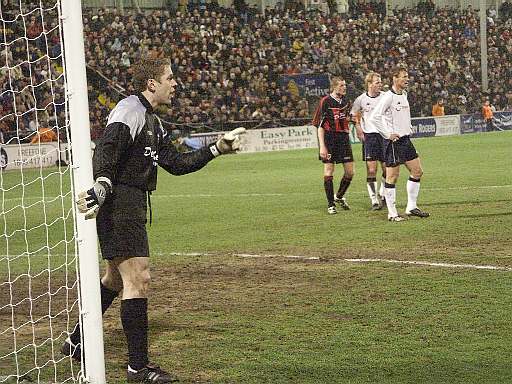
Seamus Kelly is a goalkeeping coach at Shelbourne FC of Dublin and has previously played for Cardiff City, Bohemians and St. Patricks Atheltic (both from Dublin) and has also played GAA for County Offaly. Since retiring Shay has been conducting academic research into the world of professional football coaching. 


Shay Kelly in action as Bohemians beat Tottenham Hotspurs 3-1. 

Sean Hamil is a lecturer who operates within Birkbeck Sport Business Centre at Birkbeck College, University of London and has co-produced various texts including The Changing Face of the Football Business: Supporters Direct and Football in the Digital Age: Whose Game is it Anyway? He was extensive experience with the organisation Supporters’ Direct who are a government sponsored body who encourage supporters to take shareholdings in their football club.

Gabriel Kuhn is author of Soccer vs The State: Tackling Football and Radical Politics in addition to various other texts. Kuhn is a controversial writer who recently cancelled a 3 month speaking tour of America having been put on the US “no-fly” list.


Thursday, 1 December 2011

The Psychogeography of Bicester Brand Village

In these times of heightened political consciousness, economic implosion and hand-wringing pessimism, I think it might be helpful to contribute a blog entry focusing on triviality and self-indulgence. So, I decided to write about my recent trip to the ersatz world of Bicester luxury brand Village. The full article is here http://www.chris-hackley.com/

I'm not a a member of the brand cognoscenti myself you understand. Its all my lovely wife's fault. She makes me go there, once or twice a year. What strikes me is the emotionally contained, polite, yet slightly glassy-eyed demeanour of the well turned-out and multi-cultural shoppers who throng Bicester's boutique-lined high street. Gucci, LV, Prada, they're all there. Shoppers play with meaning as they test brand after brand against their sense of identity. It's a quest for authenticity in a deeply inauthentic setting. And all at allegedly bargain prices. Pulchritude and parsimony: extravagance and thrift. And the psychogeographical effect on one's emotions is overwhelming. I dressed in brands for the experience, and I fell into the group consciousness, like an extra from Day of the Triffids, somnolently wandering from store to store with an air of quiet intensity. When my wife told me a bag had been reduced from £900 to £400, I actually thought, oh, what a bargain. My first car cost £300.

Guy Debord, the arch-psychogeographer, would have enjoyed Bicester Village. It seems ripe for a Situation, a revolutionary occupation. Its fun to imagine this plastic cathedral of brands full of running, screaming, drunken, vomiting, copulating anti-capitalist protesters. Me? I wouldn't have dared to drop a chewing-gum wrapper on the street. No revolutionary, me.  


Friday, 25 November 2011

Guy Standing - Critical Debates Series

Students & Lecturers Critical Debates - Guy Standing
Tuesday 29 November, 4:00 Rialto Room, Students' Union


Professor Guy Standing of University of Bath will host the first in the Students & Lecturers Critical Debates at Royal Holloway. Standing is the author of the high profile The Precariat which describes an emerging class characterised by insecurity and lack of any occupational identity in an age of transformation of labour (see his article in the Guardian here). 

The event will take place in the Rialto Room at Students' Union between 4 and 6 on Tuesday 29th November.

The ‘Students & Lecturers Critical Debates’ is a joint initiative between Students' Union and lecturers and is designed to critically engage with issues, foster debate and reduce barriers between staff and students and between departments. It establishes an independent forum for critical debate where lecturers and students from all disciplines can join in debate outside the rigid classroom environment and outside the rigidities of departmental structures. The underlying ethos is to create a forum for raising critical issues and to foster the exchange of ideas and positions.
The debates run in the Student’s Union. Each session draws on the work of leading contributors to a field or topic which affects civil, market and state society. It draws speakers from academe, think tanks, journalism, trade unions and beyond. The debate programme is diverse reflecting the underlying plural spirit and the desire to attract a diverse and changing audience each fortnight.
  
Our aim is to be inclusive so everyone is welcome and that includes all types of students and all types of staff from all departments.

Universities, Profit and the Creation of Cultural Content

The UK Government Universities Minister David Willetts has expressed his support for more for-profit 'university' provision. The rationale is classically economic- he argues that for-profits will help to lower prices and increase consumer choice.

But there is something missing from the for-profits.They haven't created any of the collectively produced cultural content, the knowledge, that they retail. They play no part in filling the collaborative well from which real, non-profit, universities all draw. And they have no investment in the critical thinking which defines a Western university level education.

Of course, real universities are hardly immune from the commoditization of knowledge. But they have a moral legitimacy because of the stuff they do collectively to build that cultural content. For-profits in general pay their staff only to teach, while non-profits pay their staff to do that and also to review and edit books, articles and journals, to examine PhDs and courses, and to engage in debates around research, policy and public understanding.

This cultural content is mostly free to the user, yet the for-profits are packaging and selling it. So is that cultural plagiarism?                    

This op-ed piece is a shorter version of one on my own blog http://www.chris-hackley.com/ If you're wondering if the world really needs another self-promoting opinion-fest of a blog, blame Dr Bradshaw, whose solicitations to contribute to the MA Marketing blog led to my blog-epiphany. Thanks Alan!