For more information about Royal Holloway, please see this promotional video. To see a promotional video for the MA Consumption, Markets & Culture see here. To see a promotional video for the Royal Holloway School of Management, click here.

For more information about the Royal Holloway MA Marketing and MA Consumption, Culture & Marketing and the application process see here.

To get an understanding of the unique values that underly the MA Marketing and MA Consumption, Culture & Marketing programme please read these blog posts: Value of Scholarly Values, Importance of Reading and Morris Holbrook and Business Interest in Education.

Monday, 21 May 2012

Gender Reversals "Firsts"

 
guardian.co.uk,
 
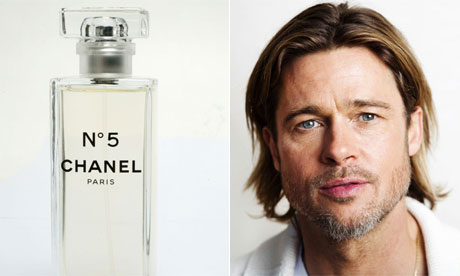
I was struck with recent announcements this week covering gender switching.  Two stories highlighting the success in (ostensibly female) beauty competitions of transgender contenders with no associated calls to have males expelled and clear messages about contestants being judged equally against the criteria.   Another flagging Lucy's request to Brad and Dan in their beachside surf shack good call centre as a creative twist (first female caller) of the UK Beer brand Fosters ongoing TV campaign.  The last that suggests Brad Pitt's appointment as the face of Chanel is the first time a male model has been used in such a way. 

 The advertising technique of inversion, or turning an idea on its head is one that most of us have seen and experienced often, perhaps not always consciously, but to an extent that this should not be out of the ordinary or worthy of particular media focus because of the gender switch.  I have been reading "The Advertising Concept Book: Think Now, Design Later" by Pete Barry and this has perhaps made me think more analytically at this rather straightforward gender inversion notion.


Does Lucy from Lancaster, with collagen enhanced looking lips, represent an attempt by the Fosters brand team to court the female lager drinker or is it merely for comedy impact  ?  Rather wimpy and possibly nerdy, our problem Fosters drinker seems to have rather punched above his weight to win a girl like Lucy. Drinking Fosters = charisma ?

Moving on from Lucy's lager to Brad's Chanel: as a non-expert male on matters pertaining to glamour brands, my take on the sumptuous, silky, overtly sexual ads that typify the perfume genre were trying to dupe sorry persuade the perfume wearer into believing that by imitating Charleze, Kylie, Scarlet or Nicole with their perfume choice then some of their allure would also transfer over too.  Perhaps some consumers are more interested in the way it makes them feel (hedonic motivation), or possibly because of the particular aroma (rational, functional attributes), who knows.  It must be something, because generic perfumes are considerably cheaper.

Making Brad the face of Chanel would seem to point at a different approach.  Now a proud father and family man, hugely successful with an extensive career in modelling and movies, the intended message might be 'wear Chanel and be attractive to men like Brad'.  More primal, more action oriented ?  Wear this, get Brad, perhaps even.  Or in an androgynous world are we merely seeing Brad as an asexual representation of unobtainable beauty ? Perhaps Chanel wants to position its brand more clearly to appeal to everyone.  Man, woman, transgender, metro sexual, if (Sir) David Beckham can wear a sarong are we just becoming more relaxed about defined gender role stereotypes ?


Wednesday, 16 May 2012

When Agamben goes to the Bank by Benedetta Cappellini


Jan Provoost (1462-1529)
Death and the Miser, 1505-10

A couple of month ago the Italian philosopher Giorgio Agamben investigated the meaning of the apparently disused word faith. Agamben is well known for his exegesis of words we take for granted such as paradigm, dispositive and animal. He usually takes a word and unpacks its most remote meanings linking them to economic and political spheres. This time he guides his readers through a fascinating journey from faith to archaeology. This is a translated and shortened version of his article “If the ferocity of financial religion devours the future” published in the newspaper “La Repubblica” (16/02/2012).

“ In order to understand the meaning of the word “future”, we need to firstly understand the meaning of a faith, a word that we do not use anymore if not in relation to religion. Without faith or trust, future is not possible. There is future only if we can hope and believe in something. What is faith then? David Flüsser – a great scholar of the science of religions- there indeed is a peculiarly named discipline - was working on the word pistis, which is the Greek term used by Jesus and the apostles for faith. One day he found himself in an Athenian square and at a certain point, he saw in front of his eyes in big letters Trapeza tes pisteos. Surprised by this coincidence he discovered that he was in front of a bank. Trapeza tes pisteos is “credit institution”. The sense of the word pistis -that Flüsser was looking for months- is simply the credit that we owe to God and that the word God owes to us if we believe in it. For this reason Paul defines faith as the substance of things we hope for […].

Our time is a time of scarce faith or bad faith, as Nicola Chiaramonte used to say. Thus it is a time without future and hopes, or with an empty future and false hopes. What is going to happen to our future in this time that is too old to really believe in something and too wise to despair? If we look carefully there is still a sphere operating with credit, a sphere wherein we put our pistis, our faith. This faith consists of money and its temple is the bank - Trapeza tes pisteos. Money is simply credit and in some banknotes (on the sterling and the dollar but not on the euro, and this should say something about the euro!) it is written that the central bank guarantees that credit in some way. The so called current crisis – albeit crisis is the normal way through which capitalism operates- started with a series of ill-considered operations on credit, such credit was discounted and resold dozens of times before being realised. This means that capitalist finance - whose banks are its main organs - works by playing with credit, hence with people’ faith. [...] The Bank with its grey senior executives and experts has replaced the Church with its priests. Governing the Bank’s credit and manipulating the scarce and uncertain faith that our time has in itself. It does so in the most irresponsible way by gaining money from people’s faith and hopes and by establishing the credit we can receive and the price we need to pay for it (even the credit of Nation States, which have abdicated their sovereignty passively). By governing credit the bank rules not only the world but men’s future, a future which the crisis makes even shorter and on short notice.

Today politics seems impossible because financial power has taken away faith, future, time and expectations. For the duration of this situation, while our society believes itself to be secular it will remain subjugated to the most obscure and irrational religion, it would be good if everybody would reclaim their credit and future from the hands of these gloomy, discredited pseudo-priests, bankers, professors and executives from various rating agencies. Perhaps the first thing to do is to stop looking only at the future, as they advise us to do, and look instead at the past. Only if we understand what happened and how it happened would it be possible to recover our freedom. Archaeology rather than futurology is the only way to reach the present.”

Dr Benedetta Cappellini lectures in Marketing at Royal Holloway. 

Saturday, 21 April 2012

The allure of VW camper vans

The allure of VW camper vans
 “Volkswagen Campervans are undoubtedly the Marmite of the motor world” states Charnock (2011) suggesting that merely a glance can provoke a strong positive or negative reaction, but never ambivalence.  Bright colours, curves to swoon for and “cute little curtains” are highlighted as visually appealing attributes.  To those of a certain generation the recollection may include iconic seventies associations such as Dylan, Kerouac, Woodstock, Peace and marijuana.  Alternatively, it might provoke a grimace, distain of the garish colouration, dislike of the patterned curtains and distinctively spherical shapes.  Enduringly associated with hippie and surf culture (Camper Van Life, 2012) VW camper vans possess an unusual, yet iconic and popular status. 

Born as a multi-functional, utilitarian vehicle in post-war Germany “even the oldest vans are practical, but they need more care and servicing than a modern car. The air-cooled engines in Splitties and Bays sound charismatic, but they’re thirsty and slow. The cab can be drafty, the steering is heavy, and you don’t so much use the brakes as make appointments with them weeks in advance.”  (Handby, 2010) 

Camper Van Life (2012) notes that “VW campers have become popular culture icons throughout the world particularly in California, UK, Australia and South Africa.”   Wallace (2009) “There’s a hugely influential and incredibly popular scene surrounding ageing VWs in the UK and secondhand values in recent years for restored and solid buses has literally spiralled out of all control.”  There is some irony in noting that a mass market, functional, flexible vehicle, successful over decades because of its afforability, should be reapproriated in such a manner. 


You might wonder why this should matter ?  Why would a successful global brand like Volkswagen be interested in heritage clubs ? What commercial benefit can they derive from vehicles manufactured in the 1960's and 1970's ?  The youtube clip above shows a 2011 VW commercial advertising spot entitled "60 years of man and van" that heavily features a pristine split windscreen camper.  Nostalgia, reliability, iconic design, loyalty, durability, passion and beauty might be ideas these images are seeking to evoke.  Cynics might point to a hinted at but not confirmed relaunch of the model under its orginal German name 'Bulli'. 

justin.obrien@rhul.ac.uk is currently undertaking research into the allure of the VW camper van, to appreciate its attraction, its iconic cultural significance and to better understand 'the scene' from a conceptual perspecitve.  If you are interested in VW camper vans, have owned one or currently own one and wish to be part of this research, please get in touch.

Tuesday, 10 April 2012

Marketing Object Extraordinaire - The Piano


Recently the BBC and British Museum collaborated on a major work entitled History of the World in 100 Objects. In similar spirit we might consider the piano as the marketing object par excellence that might facilitate an exploration of the History of Marketing in One Object. Just as the malevolent spirit invoked by the Rolling Stones’ Sympathy For the Devil managed to magically supplant himself wherever world history unfurled, so too the piano was there giving rise to, materialising, reflecting, embodying and objectifying transformations of consumer culture and marketing practices. Apart from a continuous stream of design innovations to develop new market segments and feed aspirational dreams, the marketing of the piano was also characterised by early forms of branding (to combat a burgeoning counterfeit market), celebrity endorsement and consumer credit schemes.

Emerging from what is arguably the foundational point of western consumer culture, the pianoforte arrives in late 17th century from the Medici house in Florence and heralds a new era of music for the masses and middle classes. The pianoforte, with its new dynamic range, allows for a single performer to arrive at new possibilities in polyphonic ranges, merges harmony and melody and allows a new type of music listener, a new type of musical listening and performing experience to emerge. As the romantic era commences, the piano musically realises the new ethic with new possibilities for a virtuoso performer to perform with power and drama but also with great subtlety. And when the industrial revolution arrives and the new domestic middle class home materialises, what is a centre point? The piano; that staple of bourgeoisie aspirations, that object for houses and apartments to be built around and that disciplining unit for children to learn polite subjectivities. As modernity mutates into postmodernity and we enter the age of the simulacra, the piano too is the first instrument to lose its materiality as it becomes sampled and transformed through the development of midi technology and survives today in its post-piano condition.

Tuesday, 20 March 2012

Starbucks's Faux Friendship- A Fie on it I Say


(Picture kindly borrowed from BBC News website)

Starbucks, formerly purveyor of artisan coffee to the cognoscenti, and latterly global brand Leviathan, now plans to make you tell them your first name as a condition of taking your order (see my comments in this BBC News article http://www.bbc.co.uk/news/magazine-17356957 ). That’s so they can call you by your name, and not your choice of coffee, when the drink is ready. Hearing ‘Launcelot’ or ‘Sidneeeey’ booming across a crowded cafe instead of ‘skinny latte’ is then supposed to so endear you to the barrista and the brand that you’ll return on the morrow for some more of this ersatz intimacy.

Really? (Ahem: cue grumpy rant). Isn’t this another example of our very identity being taken from us to be exploited by the Panoptic forces of marketing? What’s wrong with calling me ‘Sir’ in exchange for my money? Is keeping a polite distance now anathema to the neo-liberal model? Are we all so lonely that we yearn for a stranger to call us by our name? Or is the one-to-one marketing ideal simply the misguided result of marketing’s metaphor mangling obsession with ‘relationships’? Do Starbucks want to call me by name because marketing is incapable of deconstructing itself?

Where else could this bogus bonhomie lead? What of our right to sit in silent anonymity in a taxi? Or will the driver insist on knowing our name so it becomes impossible for us to resist his leaden attempts at conversation? “Going somewhere interesting mate?” is easily met with a “Mind your own business my good man and kindly drive your offfensively smelling vehicle where I bid.” “Going somewhere interesting Chris?” is impossible to evade. “Well, yes, actually I’m going to the doctor for a prostate examination. Happy now?” Are we to be forced to divulge our name to the bus driver so he can bid us a ‘Byyeeee Paul’ as we alight his cheery charabanc? Must we return the courtesy when the inspector informs us that we do indeed have the correct train ticket for the journey so he won’t have to fine us hundreds of pounds on this occasion? “Yes, that’s the right ticket Matthew. I don’t have to have you thrown off the train today”. “Why, thank you James, or shall I call you Jim?“

God forbid. A fie on this faux friendship I say. Give me back my dignity and leave me alone. We already have a world of excessively marketized relationships. Do we really have to have to pretend to be friends as well? The marketing Panopticon already has my bank account details, home address, date of birth, shoe size, my location, my website preferences, my friends’ names, my family photographs, my favourite music, my favourite books, my work history, shopping history, qualifications, recommendations, my accumulated Tweets, statuses and other indiscretions. It already pesters me with one-to-one communications that are supposed to be ingratiating but succeed only in beng insulting because their one-dimensional caricature of me supposes that my life is an endless repetition of the same dreary 'preferences'. I'm a quirky, capricious and unstable consumer- model that you segment modelling jerks. And please, let me keep my name for heaven's sake.

But if you do insist on buying into the Starbucks fake name game, I like this one I saw on a comment thread somewhere: "My name is Maximus Decimus Meridius, commander of the armies of the North, loyal servant to the true emperor, husband to a murdered wife, and I will have my skinny mocha with a marshmallow, in this life or the next!"
www.chris-hackley.com

Saturday, 10 March 2012

A Bit of Nonsense Now and Then is Cherished By the Wisest Men, also by myself and Jacob

I have just returned from a very enjoyable visit to the University of Stockholm where I presented a paper to their Consumer Culture Theory group. Yesterday myself and Jacob Ostberg, of the University's Centre for Fashion Studies met for lunch at a hip downtown bar and supermarket which also serves as a hotel for people's sourdough mix, lest it dies when they go on holiday (sourdough baking has apparently become a key activity among Stockholm's hip community). To our delight we found one of the products on the menu was the Södermalm Hipster Ale, which we immediately ordered. 


Our colleagues Zeynep Arsel and Craig Thompson have been researching hipster consumer culture for years and have noted how hipsters go to great length to avoid being identified as a hipster and so all sorts of ironic interfaces open up between the holders of hipster capital and its mainstream representation (see their hit paper here). With such scholarship in mind and under the influence of the object in question, we wondered what was the appropriate level of ironic detachment for consuming Södermalm Hipster Ale. As Jacob wondered, should the Södermalm Hipster Ale be consumed ironically, inducing a type of double irony; whether one should pursue a post-ironic stance thus surpassing any sense of irony; or whether it is possible to adopt a pre-ironic attitude that nullifies the original irony. Consulting Zeynep, as we obviously were obligated to do, she pondered that perhaps now is the time for hipsters to re-appropriate the word. And hence I could not resist penning the following:

I’ve hung around every hip downtown
From Brooklyn to Berlin
Ate sourdough bread, with pesto as a spread
Played Cohen on a violin
I used to scoff in my Hackney loft
Until ironic became hegemonic
I was left adrift by the cultural shift
That cast aside my hipster stride.
But I went to roam inner city Stockholm
I veered for some wiessbier
When I found that holy grail the hipster ale
The beer so sincere
So I said please ma’am ‘a bottle of Södermalm’
Gave my kroner to that stoner
It was my assumption this was post-ironic consumption
It was ok to be fey
The hipster solution for the counter-revolution
Is to sip to be hip.
So all you petit-bourgeoisie with your trimmed goatee
Follow me to your liberty
You see we cannot fail when we can buy for sale
The Södermalm Hipster Ale!

Friday, 9 March 2012

Brands in TV Content- How They Get There in UK TV


Have you ever wondered how brands get into TV scenes? Perhaps you've assumed that they're all paid for in clandestine deals designed to culturally manipulate us into a brand consumer mindset. The cultural manipualtion may be a reality, but the way brands appear on TV is more ad hoc and serendipitous than you might think. The truth is that the volume of programming is so huge that most brands in TV are there because the producer and props manager need props for the scene and no-one has time to set up a deal.

In the UK, brands were not allowed to pay TV companies directly to appear in scenes until last year. In February 2011 the UK media regulator, Ofcom, decided that UK TV needed the money and finally allowed paid-for product placement. The problem for the industry is that is simply hasn't taken off and the TV companies aren't making any money from it.

This is partly due to the complexity of Ofcom's rules which, among other thnings, ban paid-for placement of alcohol, cigarettes, guns and high fat food. In other words, all the stuff you watch TV to see. The high fat foods ban even means that a cooking show can't do a deal for cooking oil or cheese.

But there is another reason the UK TV paid-for market has flopped. It's because UK TV has been liberally supplied with branded scene props free of charge for over 30 years. In the picture above, a Blackberry is seen from a BBC show. Yes, even the non-commercial BBC need realistic scene props. The UK has about 12 product placement agencies supplying free props for domestic TV production. Some of these agencies started the business three decades ago. They collect a retainer fee from the brand client and give the TV companies all the scene props they want for nothing.  Its a well-established business model everyone understands.

The Ofcom rule change allowed TV companies to do deals with brands dierctly for guaranteed placements, but they have a hard sell. They're asking brand clients to pay double the fee they pay the agencies for free prop supply in return for a tenth of the screen time, and they can't even guarantee a close-up under Ofcom's strict rules on prominence and editorial relevance.

We've been looking into this complicated policy issue which will have a huge influence on how UK TV looks in the future. The TV companies are desperate to benefit from the fat revenue streams paid-for product placement can bring, but many in the UK are worried about commercial influence in the way UK TV looks.

More on this at www.chris-hackley.com